

- Voice-enabled bar inventory
- iOS & Android
VoiceStar.ai case study
Cuts the manual hours spent accounting for inventory.
- Platform
- iOS & Android
- Features delivered
- 1
- Lead stack
- Node.js, AWS Lambda
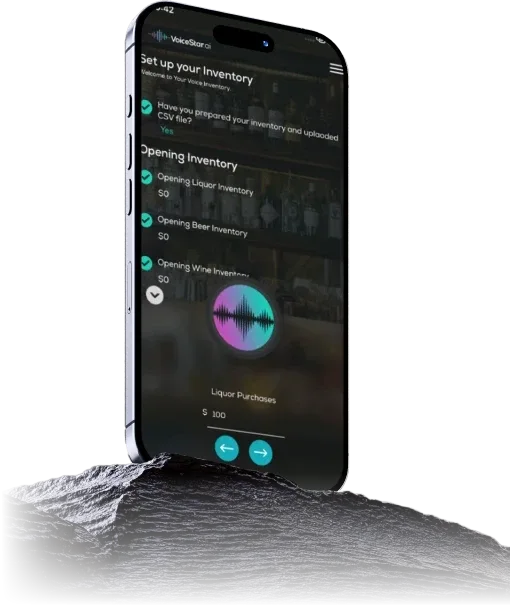
Overview
Cuts the manual hours spent accounting for inventory.
VoiceStar.ai is a SaaS platform providing an AI-based mobile application for restaurant and bar professionals to manage their bar and food inventories by voice, reducing the manual hours spent accounting for inventories compared to current systems.
VoiceStar.ai targets the legacy business process using advanced AI, and has the following objectives: 1. Reduce the time & cost involved in taking inventory, 2. Automate routine and task management, 3. Reduce management turnover with voice assistance over keyboards.
- Category
- Voice-enabled bar inventory
- Platform
- iOS & Android
- Built with
- Node.js
- AWS Lambda
- AWS Lex
- AWS Transcribe
- Express.js
- AngularJS
- MongoDB
- React Native
- NGINX
At a glance
- 08Problems solved
- 01Features delivered
- 02Platforms
- 09Technologies
- ClientAngularJS, React Native
- ServicesNode.js, Express.js
- DataMongoDB
- Cloud & hostingAWS Lambda, AWS Lex, AWS Transcribe, NGINX
The problem
- 01
The client approached us with a very innovative vision of managing their bar inventories with the help of human voice. The target audience was bar and restaurant owners in the MVP phase.
- 02
The client was concerned with the technology, and was looking for a scalable robust solution to help them connect with their target audience.
- 03
The client wanted us to suggest the core voice transcription technology for the product.
- 04
The users needed access to reports instantly after completion of the inventory.
- 05
The client was looking for an edit function that would allow users to edit their transcribed data during the voice counting process.
- 06
The client wanted to implement voice-enabled inventory updates to reduce paperwork.
- 07
The client wanted to have some checks that needed to work in the backend for differentiating the product type while importing it into the system.
- 08
The client wanted a marketing website with the functionalities that allow users to buy a subscription plan or log in to their web portal. They have introduced some changes inside of this module like coupon codes and one-time setup for their users.
The solution
Core features
- 01
We analyzed the requirements of the client and provided the appropriate technology solution for launching their idea into the app market.
Under the hood
- 01 · Client
What people touch: the product on iOS & Android.
- AngularJS
- React Native
- 02 · Services
The logic behind it: APIs, business rules and integrations.
- Node.js
- Express.js
- 03 · Data
Where the product keeps its records.
- MongoDB
- 04 · Cloud & hosting
How it is served, scaled and kept running.
- AWS Lambda
- AWS Lex
- AWS Transcribe
- NGINX
- One React Native codebase serves the mobile apps, so every release reaches iOS and Android together.
- Serverless functions on AWS Lambda run the back-end work, so capacity follows demand.
- Voice input runs through AWS Transcribe and Lex, so the app understands what people say.
Build your team
Share where the roadmap is blocked and the capabilities you need. We’ll map a practical team and delivery model.