

- Nearshore
Nearshoring Trends in 2025: What's Driving the Movement, and Who's Gaining from I
- Written by
- Hemant Madaan
- Published
- 21 August 2025
- Reading time
- 10 minutes

One major lesson that global businesses had to learn during this past decade was that talent had no borders, but time zones sure had them. In the year 2025, that very realization comes into play and brings forth a huge change in thinking in the software industry. The whole mindset of “let’s just outsource to the cheapest location possible” is being quietly displaced by something more acute, fast, and, frankly, intelligent: nearshoring software development.
Now, if you want to think of nearshoring as merely an extra fancy term for outsourcing, let’s take a break right here. It is more than about who you hire from; it is about how you get things done, how quickly you shift regarding market changes, and how much control you keep over quality.
In this blog we’ll understand what Nearshore development is and recent nearshoring trends 2025, whom they are helping and how this shift towards nearshore software development is changing the way we outsource software development projects.
What is Nearshore Software development?
Nearshore software development refers to outsourcing software projects to companies situated in nearby countries and generally within the same or a similar time zone. Nearshore development allows companies real-time teamwork, cultural alignment, as well as faster communication between all parties, and also provides traditional outsourcing benefits like cost-cutting and skillful resources. This approach balances the speed, quality, flexibility, and cost decrease from one side with all of the constraints of working with offshore teams on the other.
Who truly benefits from nearshoring?
While nearshoring is reconstructing delivery models across the board, certain industries and organizational profiles stand to benefit more, especially the early adopter.
- Mid-to-Large Enterprises Modernizing Their IT Ecosystems: Organizations going through cloud transformations, ERP modernization, or refactoring applications usually need iterative collaboration with intense integration of legacy systems and on-demand access to technical experts. Nearshoring software development supports shorter delivery cycles, with tighter alignment to internal product teams; critical for mission-critical workloads.
- The Nearshoring benefits for Startups: One thing which is very common in every start-up is they live and die by speed, burn rate, and investor confidence. Nearshoring benefits for startups as it allows them to immediately onboard more developers in no time and as all the developers will be working in same time zone there will be lower miscommunication.
- Regulated Industries: With complicated compliance requirements and sensitive data, industries such as healthcare, banking, or global trade are using nearshoring for tighter oversight and auditability. In such sectors, control equals trust, and this is what nearshoring software development offers.
- CX-Focused Organizations: Retail, SaaS, and companies within the consumer tech ecosystem are investing in bilingual and bicultural support teams that can deliver superior customer experience over multiple channels. Nearshore software development teams offer English proficiency, cultural fluency, and native Spanish or Portuguese, ideal for working with multilingual markets across the Americas.
- Local Economies and Technical Hubs Across LATAM: Nearshoring trends 2025 benefits go both ways. Numerous governments and private alliances across Latin America are seizing the rise of nearshoring. With time the global demand for skilled IT professionals is increasing drastically. LATAM economies are growing immensely without compromising on skills and data security.
Nearshoring Trends 2025 – Must for Survive and Thrive
There was a time when Nearshoring software development was considered niche outsourcing alternative is now has become a main option for companies. Today nearshore development has forced Silicon Valley start-ups and fortune 500 to rethink their delivery models. Honestly, nearshoring software developments is not just about hiring cheap talent, it is more than that.
Let’s look at some of the biggest nearshore outsourcing trends 2025 which have reshaped the industry.
AI and Automation Elevate Nearshoring at the Strategic Level
With the introduction of AI and automation, the landscape of nearshoring software development has changed into a paradise for efficiency, innovation, and strategic value. In 2025, Nearshore software development provider is using AI to not only improve efficiency but analyze and further challenge what business objectives are all about. This will allow coding, debugging, and quality assurance to be automated, this will reduce the project timeline without compromising on the quality.
Automating workflows will present a new paradigm-freeing customer service and manufacturing. AI chatbots and predictive analytics tools will allow precise handling of standard operations and developers can focus on complicated and high-impact operations.
Reskilling and Upskilling to Build the Workforce of Tomorrow
As the industries change gears at ever-increasing speed, the interest of nearshore providers in reskilling and upskilling their people to stay ahead of present and future requirements and technological changes is also increasing. The rapid adoption of technologies like cloud, cybersecurity, digital platforms, has created a need for highly trained professionals so they can adapt to change. By 2025, more resources will be allocated towards workforce development by nearshoring software development providers. Many organizations are partnering with educational institutions and launching their own in-company training programs to plug the skill gaps.
Prioritizing Data Security and Compliance
In the last few years, data security and compliance has become a priority for every organization as everyone has understood that in this data driven world, data is a backbone of any business. In 2025, organizations will prefer the nearshore software development partner with the excellent data protection techniques and international compliance standard adherence. Bridging distances benefits nearshoring development companies in this arena. Nearshore service providers often share the regulatory framework and legal alignment and reduce the risk of compliance failure. With the tightening of global data privacy laws, companies will be attracted to providers who have a record dealing with such multi-jurisdictional requirements. For nearshore providers, certifications such as GDPR or ISO will become a means of attracting customers.
Tech Hubs as Engines of Innovation
The nearshore spots are being transformed at lightning speed into technology hubs with access to high-end technology. These hubs are supported with infrastructure, vibrant talent pools, local institutional support to graft further to an industry in AI, creative design, and software development. In 2025, nearshoring software development will no longer be a transactional relationship but more of a collaborative effort in innovation.
This shift of trends towards the nearshore show companies considering it as a strategic partner rather than just a cost-cutting option. By partnering with the nearshore companies, organizations can get early access to the technology that will help them in rapid development of new products and services that will change the industries.
Stability as a Driving Factor
In the last few years, we have seen everything economy collapsing, natural disaster, wars, and in this world, stability has become a crucial factor in nearshore outsourcing trends. Nearshoring offers almost guaranteed stability-with businesses flocking to places with predictable regulatory environments and transparent governance systems. This stability lessens the risks of disruptions in supply chains, issues with labor, or any sudden change in ruling policies. For manufacturers and tech industries that place heavy weight on operational longevity, stable nearshoring destinations are the first options of organizations. With stable nearshore countries, businesses can build long-term working relationships with fewer concerns about volatility.
The Hybrid Work Evolution
Next nearshoring trends 2025 is hybrid work. Once considered an innovation, hybrid work models are now an operational norm, and the evolution of nearshoring supports this flexibility. Cloud platforms and other advanced collaboration technologies, including real-time communication systems, provide nearshore teams with the ability to work together with in-house teams as if they were in the same place. Immersive technologies will shape the future of hybrid working for nearshore activities. In the next few years, VR and AR tools will enable a level of interaction much nearer to face-to-face, to collaborate on tasks and problem-solving. These technologies build stronger relationships between teams and streamline the workflows spanning across borders.
Cultural Alignment as a Success Factor
Cultural alignment makes nearshoring software development partnerships viable. Proximity instills shared values and work ethics, besides communication styles-enticing smooth working operations. All that glues the teams and forges trust: work barriers cease to exist and accelerate achievements. In 2025, companies increasingly want providers with strong understanding of their workflows and operational Culture; what nearshore offers. These little things make a huge impact on trust and collaboration and build a smooth workflow.
Future of Nearshoring – What it Holds
One thing has become sure Nearshoring has become the first and the best option for outsourcing and it will stay in the market for a long time if not forever. The future of nearshoring depends on the three big nearshoring trends in 2025:
- AI-Fueled Collaboration: AI is also evolving at a very high speed and soon AI will be used in Nearshore to enhance the workflows and communication across teams which will result in better collaboration and enhanced product development.
- Regional Specialization: This one is personal but soon we may see regional specialization in nearshore outsourcing for example: Latin America might lead in fintech dev, Eastern Europe in cybersecurity, and others in cloud-native architecture. This will create a specialized talent hub in specific regions.
- Hybrid Team Models: Hybrid work model will play a crucial role in future of nearshoring. As soon the employees or companies normalized hybrid works, they will understand that nearshoring teams can work with in-house team once or twice in a week which will foster camaraderie and helps team to understand their working style.
What Should be Your Next Smart Move
Keeping all the factors (cost, communication, collaboration, outcomes) in mind, nearshoring is a must have thing for better growth, results, and most importantly profits. most importantly profits. With nearshoring benefits and better Return on Investment ROI, 2025 is the best time to explore nearshore development services.
Why Nearshore with JumpGrowth?
Being a renowned name for nearshore software development, JumpGrowth has worked with over 500 clients from different industries. We are known for not meeting our clients’ expectations but to exceed them redefine the industry standards. With over 500+ skilled professionals from different industries under the same roof, JumpGrowth is highly praised by several big names and is the top development company by clutch.
With over two decades of experience in industries like healthcare, fintech, AI, energy, eCommerce, JumpGrowth combines US regulatory compliance with deep professional knowledge. Our professionals effectively understand the unique client goals and provide the best outcomes.
Let’s talk about how we can be your strategic partner in this everyday evolving world.
Conclusion
Nearshoring trends 2025 is not something of a flashy passing fad, it has become a progression of how smart companies build digital products, grow them, and sustain them. From startups chasing their first launch milestone to enterprise teams quickening their innovation cycles, all these numbers and market trends portray one story: nearer is better.
Many fortune 500 and start-ups are opting for nearshore development in 2025, if you are still wondering whether it is right for you or not, you are just getting behind your competitors. Because the future belongs to companies that innovate fast, iterate with no pain, and deliver fast without any pause. Nearshore developments services are quickly becoming one of the sharpest tools in this arsenal.
FAQs
01What is nearshoring software development?
Nearshoring software development involves outsourcing of projects to a neighboring or nearby country, and always in a similar time zone within cultural similarity. It is supposed to ease collaboration, lessen any sort of delays, and increases the quality as against conventional offshore outsourcing.
02Why is nearshoring gaining importance in 2025?
Since disruptions to global supply chains occurred, rising offshore costs, and an increased emphasis on agile product development, proximity, talent quality, and speed became greater priorities than about low cost.
03Which regions seem to have risen most along with the nearshoring boom?
Latin America (Mexico, Colombia, Argentina) stands as the heart of USA companies’ approach when Eastern Europe (Poland, Romania, Ukraine) takes the lion’s share for the European market. These geographies offer great engineering talent, cultural fit, and decent pricing.
04How do the nearshore advantages differ for startups vs large enterprises?
Startups benefit from fast scaling and rapid MVP launches without heavy operational costs. Enterprises use nearshoring to create innovation hubs, run pilot projects, and accelerate digital transformation without overloading local teams.
05Is nearshoring more expensive than offshoring?
Truly rates in the nearshore can be a little high sometimes but if we compare it with other advantages like productivity, communication efficiency, and time-to-market nearshore is a better choice – leading to better overall ROI.
Keep reading
- Nearshore

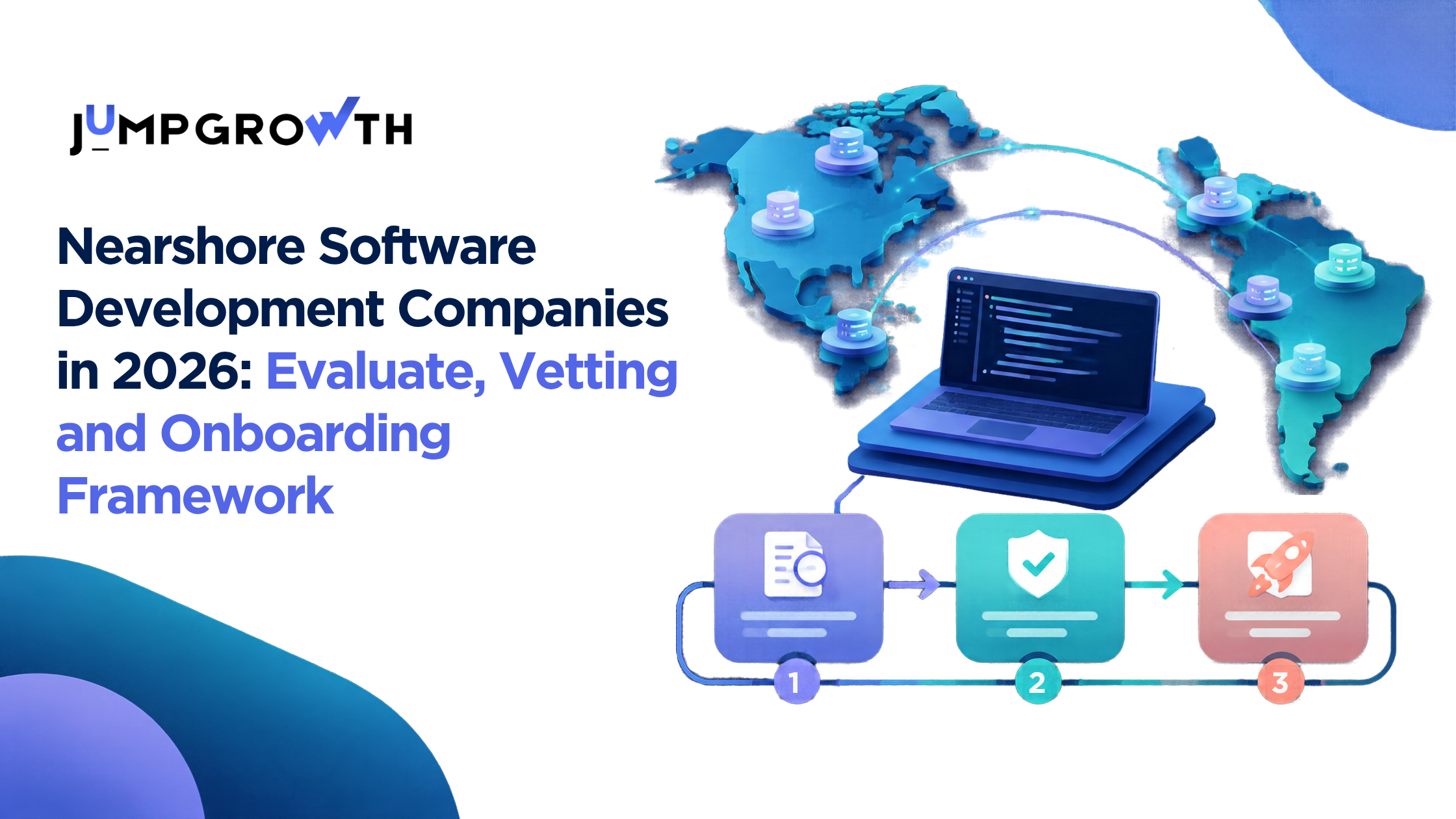
Nearshore Software Development Companies in 2026: How to Evaluate, Vet, and Onboard the Right Partner
1 minute readRead article - Nearshore
Nearshore Software Development in 2026: Cost Savings, Time Zone Alignment and How to Pick the Right Partner
10 minutes readRead article - Nearshore
Nearshore Software Development Teams in 2026: Time Zone, Cost, and Talent Quality Compared to Offshore
10 minutes readRead article
Build your team
Share where the roadmap is blocked and the capabilities you need. We’ll map a practical team and delivery model.
Comments
Be the first to comment.