

- Software Development
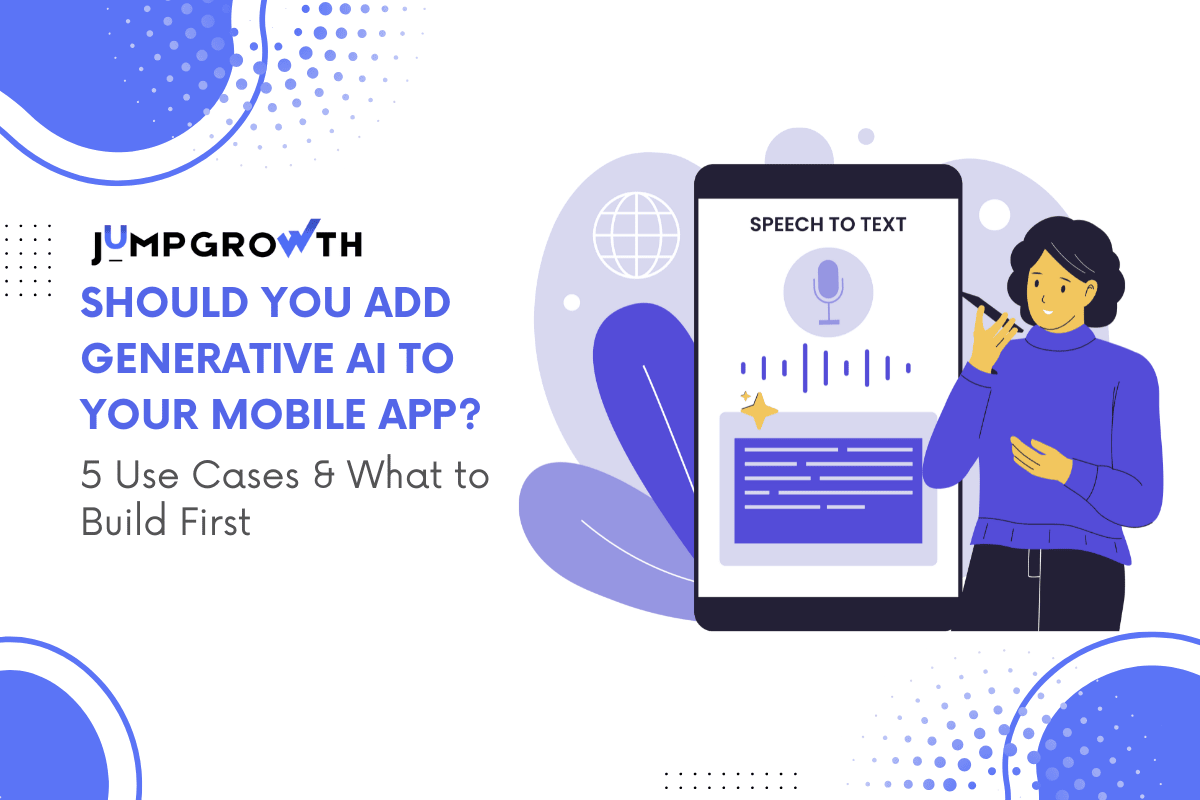
Should You Add Generative AI to Your Mobile App? 5 Cool Uses & Where to Start
- Written by
- Hemant Madaan
- Published
- 17 September 2025
- Reading time
- 9 minutes
Why Add Generative AI to Your Mobile App?
The first thing you might be wondering is why should you add Generative AI into your apps. Honestly, Generative AI is no longer a buzzword, with its benefits and user engaging power it has become a must have weapon for applications. Generative AI helps you to keep the users coming back and make your application one of their favourites which is probably what you also want. Personalization is what users want nowadays, and Generative AI makes your app feel personal. For example, you’ve got a fitness app that includes generative AI that will create a custom workout plan or a healthy meal plan for them. Every fitness enthusiast wants someone who can do this for them; they will love it, and guess what? They will keep coming back and recommend your app to their circle. Data shows that apps that use AI have a lower churn rate by 36% and have boosted revenue growth by 22%. It also boosts fun. Generative AI can make interactive stuff, like stories for a reading app or cool avatars for games. Along with this, it saves time as it allows us to automate things like writing product descriptions or answering customer questions. That means less work for you and happier users. But it’s not all smooth sailing. Adding generative AI in mobile apps can be tricky. You need to handle user data carefully to follow laws like GDPR. Sometimes, AI might give wrong info, which can annoy users. Also, it needs strong tech either powerful phones for on-device AI or cloud servers, which can cost more. Still, the benefits are huge. Tools like Google’s Gemini Nano make it easier to add AI for mobile apps, even on phones. If your users want more personal or creative features, generative AI could be your ticket to standing out.5 Awesome Ways to Use Generative AI in Mobile Apps
Ready for some ideas? Here are five practical generative AI use cases that can make your app shine. These are real-world examples from apps in shopping, entertainment, and more.Custom Content for Users
Generative AI allows users to create customized content according to their needs. For example, if you’ve a fitness app, users can use the generative AI to create customized exercise sessions, healthy diet plans, and other things for better results. Same if you’ve a cooking app, you can provide generative AI to provide custom recipes. Generative AI makes users feel like the app is specially coded for him or her. Feels like the app knows you. In result, users keep coming back and your app’s user engagement time will increase rapidly. Generative AI uses your user’s data (Safely) and creates content for them based on their past activities.Smarter Chatbots
Old-school chatbots were stiff and boring. Now, generative AI makes them chat like real people. Think of a productivity app where the assistant writes emails or plans your day. In shopping apps, AI chatbots can suggest products with detailed descriptions or help with returns. These smart bots respond fast and remember past chats, making users feel heard. They’re great for apps in retail or customer service, boosting sales and happiness. This generative AI use case is a must if your app needs quick, friendly support.Personalized App Design
Why do you have a boring app layout? Generative AI can change your app’s look based on what users like. A news app could create a custom dashboard with colours and fonts you love. An education app might also build unique study plans with quizzes or visuals. This makes your app easier to use and more fun. Developers can tweak designs faster, and users get a better experience. If your app needs to feel unique or accessible, this is a great place to start in AI app development.Creative Tools for Users
This one is the best feature which I like and you might also like it. When you embed Generative AI into your application it lets users to be creative. For example, if you have a music app, users can write a simple prompt about their music vibe, and it will generate a tone for them. In photo apps, users can create high quality images out of their imagination. In games, they can build a new level or an avatar for themselves to feel more connected. In nutshell, generative ai let users become creators which builds a feel, so users return to your application again and again.Planning and What-If Scenarios
Generative AI isn’t just for fun; it can plan ahead. In health apps, it might show how your habits affect your future, like aging simulations to inspire better choices. Finance apps can create budget plans or show “what-if” scenarios for investments. For travel apps, AI could build custom trip plans based on your budget. This builds trust by helping users make smart choices. If your app helps with planning or decisions, this generative AI use case can make it stand out. So, these are some of the most common uses in different applications to provide generative AI and let the users keep coming back. But don’t get overexcited; you must understand a few things before building a generative AI for your mobile application.Things to Consider When Building Generative AI for Your Mobile App
Generative AI for mobile applications sounds exciting, but you must first understand a few things to get the best out of it. Below are the five things you must consider before building a generative AI for your application. Understand Your Users’ Needs: This should be your priority; you must understand your users’ needs and the pain point of your business. You can talk to your users or expert in generative AI development to spot pain point or user needs. Building AI for mobile apps without a clear purpose wastes time and money. Choose the Right Tech: Choosing the right tech stack is very important to build a generative AI for your application. If you want a quick tool, you can use pre-built API from Open AI’s GPT, Google Gemini, or build your own AI model. Prioritize Data Privacy: Privacy is what users need nowadays, and they trust you with their data so don’t mess up. Be clear about how you use users’ data and get user consent. Always go with a privacy-first approach to build trust and avoid legal headaches. Plan for Costs and Resources: You must face it, building Generative AI isn’t cheap; basic setup can cost over $10,000, and if you want a custom AI model, the cost can go up to $100,000. The best option so far to build your generative AI model is to get connected with an artificial intelligence development services partner . Test and Iterate: Don’t launch AI features without testing. Run A/B tests with a small user group to see if your generative AI use case boosts engagement or retention. For instance, does an AI-generated workout plan keep users longer? Gather feedback and tweak. This ensures your AI for mobile apps delivers value without bugs or confusion.What to Build First: Your Game Plan
Feeling inspired? Don’t try to do it all at once. Start small to see what works. Look at your app’s biggest problem. Work with pros in artificial intelligence development services to avoid mistakes. Build one simple AI feature first, see how users like it, then add more.Final Thoughts: Is Generative AI Right for You?
Adding generative AI to your mobile app is the best way to make users come back and stand out in this mobile app’s ocean. Generative AI makes your application smarter, more personal, and way more fun; the best way to make your users happy. However, as mentioned earlier, it’s not about following the trend; you need to consider a few things before you build a generative AI for your application. Connect with professionals like JumpGrowth to understand your users’ needs, find the best use case of generative AI for your application, and learn more about how an Artificial Intelligence development service can help you to stand out in the market.FAQs
01What are the perks of generative AI in mobile apps?
It makes apps personal, boosts engagement with fun content, and saves time by automating tasks. Users stay 30% longer, and it helps your app stand out. Think custom workouts or smart chatbots users love it!
02How do I add generative AI to my app?
Use tools like Gemini or OpenAI APIs. Connect them to your app’s backend, follow privacy rules, and test small changes. Work with experts for smooth mobile app AI integration to save time.
03What are the downsides of generative AI in apps?
It can be complex, costly, and sometimes gives wrong info. Privacy and data laws are big concerns. Start small and test to avoid issues in AI app development. (40 words)
04How much does generative AI cost for a mobile app?
The cost of Generative ai development depends on your users’ needs and pain points so there is no particular number. However, a basic generative AI can cost around $10000 and for custom AI can range to $100,000+. Get connected with artificial intelligence development services for accurate quotes.
05How long does it take to add AI to a mobile app?
The time depends on your I model’s needs, if you want to add a simple generative ai feature it will take 2-3 months whereas for a custom AI development can take 8-12 months.
Keep reading
- Software Development
What Is Reverse Engineering in Software Development? Process, Benefits, Challenges, and Use Cases
2 minutes readRead article - Software Development
Product Engineering Services in 2026: What They Actually Include (And What to Demand from a Partner)
11 minutes readRead article - Software Development


Custom Software Development Company vs. In-House Team: A 2026 Cost and Risk Analysis
11 minutes readRead article
Build your team
Share where the roadmap is blocked and the capabilities you need. We’ll map a practical team and delivery model.
Comments
Be the first to comment.